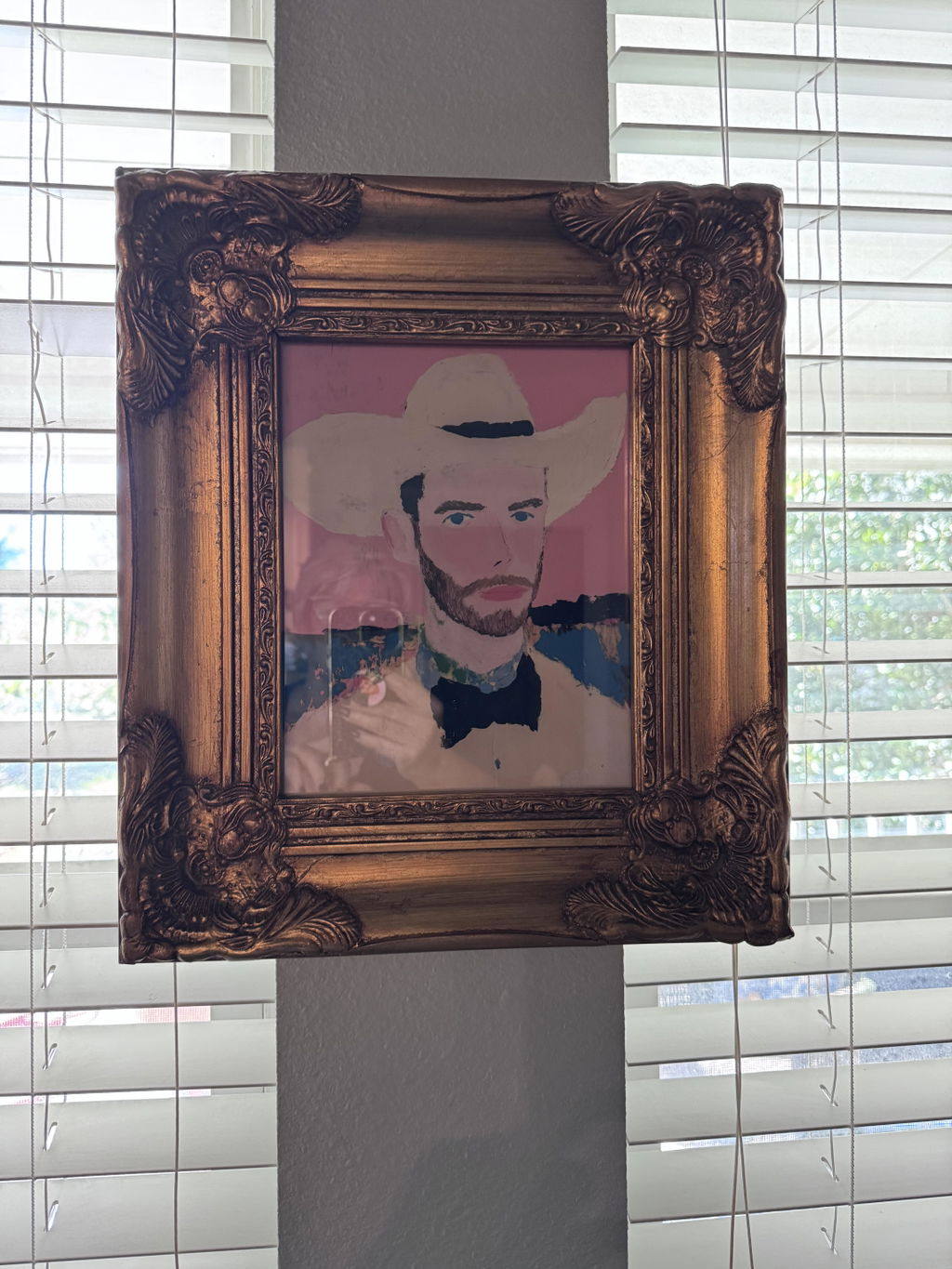
You fall in love with a piece of art. Then you look at your room and begin negotiating away the very things you loved about it.
The color might be too strong. The subject is different from anything else you own. You had imagined something quieter above that table. Within minutes, an image that made you feel something delicious has become a problem to solve.
No, art does not need to match your room. It can share colors, materials, or a feeling with what is already there, but exact coordination is optional. A work you love can introduce something new and still belong beautifully. You don’t have to find its color in the curtains before inviting it home.
I would be particularly interested in the piece you keep returning to despite your excellent arguments against it. Something has caught you. Give it a little time before handing the decision back to the curtains.

Matching can be lovely until it becomes the whole assignment
There is pleasure in discovering a connection. A green in the art catches the green in a woven rug. The dark edge of a frame looks wonderful near an old wooden chest. Your eye travels between them, and you enjoy the relationship.
I love that sort of noticing. But it can become an oddly restrictive way to shop.
You begin looking for an image containing three particular colors, in the correct proportions, preferably with nothing unexpected happening in the middle. Somewhere along the way, you stop asking whether you want to look at it. You are checking whether it qualifies.
Art has rather more to offer than proof that you remembered the upholstery.
You might also consider a set of art—two pieces, or four, that give your eye more to wander through. You can enjoy the relationship between the works without requiring them to repeat everything around them. The art can have a conversation of its own.
An exact match may delight you. Choose it if it does. I would simply make sure the image itself is part of the delight.
What if the color appears nowhere else?
You can let it be there.
A color doesn’t always need a supporting cast scattered through the room. Sometimes its singular presence is what you enjoy: your eye goes to it, stays a while, then travels elsewhere.
If you bring colorful art into a neutral room, you may discover that you like the distinction. The room gives the image space to be seen. There is no immediate obligation to purchase a throw, a vase, and two cushions to demonstrate that the color was intentional.
Live with it before deciding it needs assistance.
You might eventually find a small connection you enjoy. A book jacket on a shelf. Something you already own that looks different now. That can happen naturally, and there is pleasure in recognizing it rather than arranging every echo in advance.

The same freedom applies in the other direction. A room full of color can hold a quiet image. You might love the stillness of it among everything else. The art needn’t compete with the room’s energy or reproduce it. You can choose the experience you want when you look toward that wall.
Your furniture doesn’t have to choose your art style
A traditional room can be a wonderful place for contemporary art. Something spare among carved wood and patterned fabric may make you notice the detail of both. A simple room can hold an extravagant floral without requiring the rest of the furnishings to become equally exuberant.
Imagine a lush floral above a plain wooden table. You can enjoy the fullness of the image—the petals, the tangled stems, the sense of things opening—while the table continues doing its very useful work below. You haven’t created a decorating contradiction. You have given yourself two different pleasures in the same view.
Sometimes the difference is what makes you love the combination.
Think about the things you enjoy outside your home. Your reading probably isn’t confined to one kind of book. Your appetite can accommodate a buttery pastry and something sharp with lemon. We allow ourselves variety everywhere else, then become astonishingly strict about what can sit near a chair.
You don’t have to acquire an entirely new room to accommodate another interest.
If a pairing makes you curious, look at it together. Use a room preview if one is available, or compare photographs of the art and the space. Let yourself see the combination before rejecting it on the basis of a style name.
There is a difference between an interesting contrast and a pairing you don’t enjoy
Of course, loving an image doesn’t mean you will enjoy it equally in every position. Sometimes you put two things together and your eye won’t settle. You find yourself trying to see the art past the pattern behind it, or wishing the work beside it had a little more room.
That is useful information. It doesn’t automatically mean you bought the wrong piece.

Try another wall. Give it some space. Move the neighboring work. Look from where you normally sit rather than judging everything with your face six inches from it.
A frame can help, too. A defined edge may make an image easier to see against patterned wallpaper. A mat around paper art can give it some breathing room. Consider those options because of what they do for the work, rather than requiring every frame in the house to match.
And if you love the art but dislike that particular arrangement, you can keep one and change the other. Art has lovely flexibility. A piece intended for the living room may become the thing you most enjoy seeing beside your bed.
You are allowed to find its place through living with it.
Let different loves live together
I have lived in many homes throughout my life, and my art collection has continued growing. The surroundings change. The work finds new company. I am not choosing every new piece to resemble the last one; I am responding to whatever has caught me now.
That means a collection can contain different moods, subjects, and styles. Something bought long ago can live beside something you have just discovered. You can have a great affection for both without making them pretend they came from the same moment.
If you enjoy bohemian and eclectic art, that variety may be part of what draws you in—the feeling that there is more to explore than one neatly repeated idea. But you don’t need to call your home eclectic to mix the things you love.
Try placing different works together. You may notice a shape appearing in both, or a shared warmth, or a contrast you find irresistible. You might like them as separate images and discover that together they offer something else.
Give yourself room to make those discoveries. A home can hold evidence of several chapters of your life. It would be a shame to remove the things you still love because a newer purchase arrived with different ideas.

When you love it but aren’t sure it belongs
I would ask what, specifically, you are unsure about.
If the concern is size, check the finished dimensions and picture them on the wall. If it is the amount of detail, consider whether the image would be easier to enjoy somewhere quieter. If you don’t like the frame, look at the other presentations available.
Those are decisions you can address.
But if the concern is simply I have never chosen anything like this before, I would keep looking at the piece. Your tastes are allowed to develop. You may be discovering an appetite that has been waiting for your attention.
Perhaps you have always chosen landscapes and now find yourself lingering over something fanciful. You don’t quite know what you would say about it if someone asked. You only know that you are pleased every time you see it.
That is a substantial thing to know.
You can enjoy art without becoming its spokesperson. There is no requirement to explain why an image belongs in your home to the satisfaction of everyone who visits.
You can love the room and still give it something new
The room you have is not a contract with your future taste.

You can have chosen the furniture carefully, enjoyed it for years, and still want art that brings a different feeling. You might discover that one image makes the familiar surroundings more interesting to you. You look at the room again because there is something new to notice.
If you would like to wander through Porter Art Guild, begin with what catches you. You can think about the wall once an image has given you a reason to.
I am far more interested in the pleasure you take in looking than in whether every color has been accounted for. Sometimes you find the piece, bring it home, and move a few things until you can see it properly. Then you sit down, look up, and remember why you wanted it before you began worrying about the curtains.