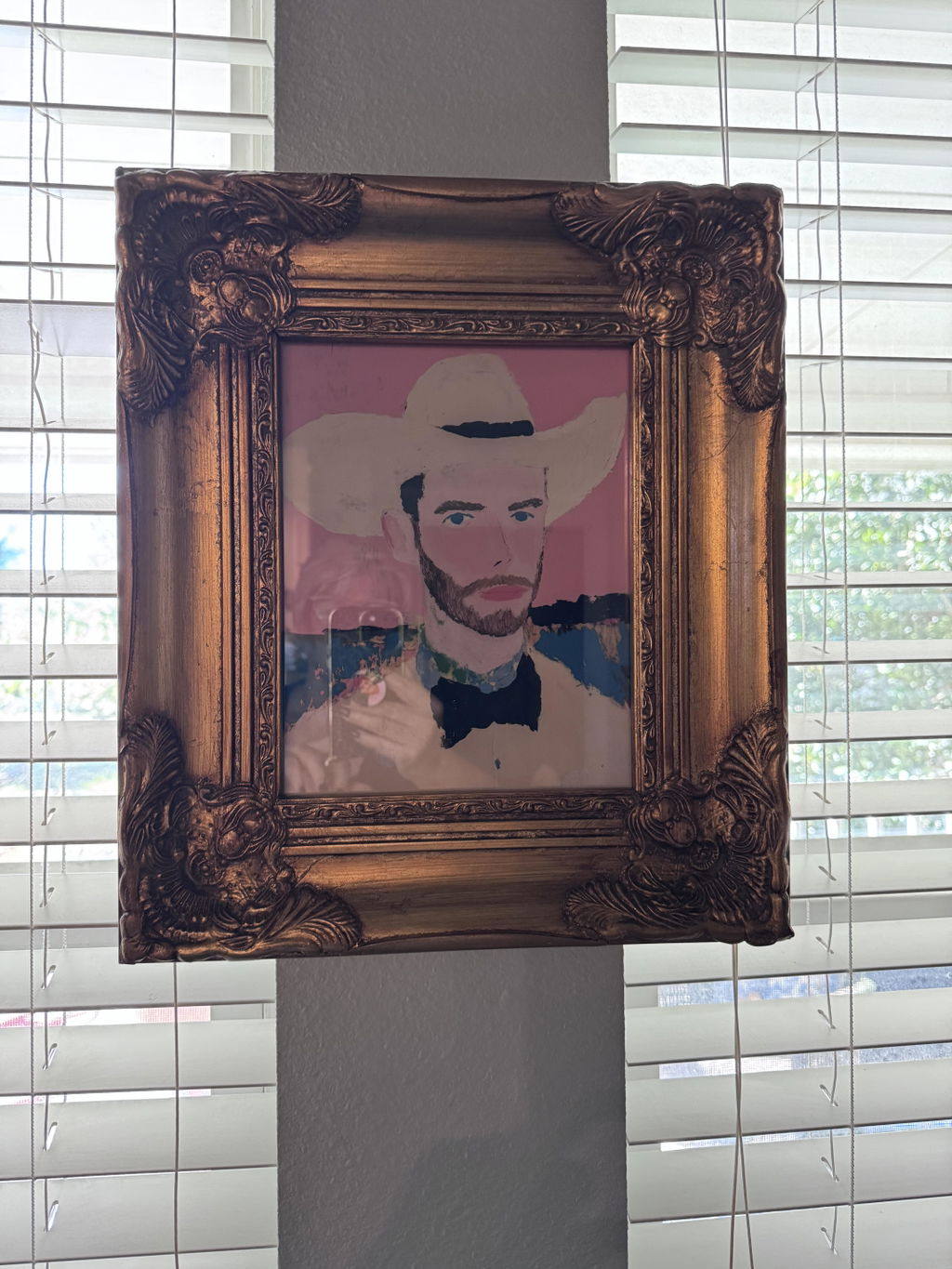
I have gone through more sofas than I can remember. The art has stayed.
Some of those sofas must have seemed terribly important when we chose them. Now I couldn’t describe half of them. Meanwhile, my art collection continues to grow, coming with me from one home into another. Art is something I can imagine passing on. I am not anticipating a family discussion about who gets the pillows.
When people ask how to choose art for their homes, I think about that difference. Begin with something that stirs you—an image you want to look at again, a color that catches you, a feeling you cannot quite explain. You can consider size and presentation once you have found something you want near you. You don’t need to have its entire future worked out.
I tend to trust that delicious little certainty: I love this. I’ll find a place.
Art gives us a lovely amount of wiggle room. You can sneak a small piece beside your books, hang it where you will see it over breakfast, move it into the bedroom when you want it closer. An armoire is another conversation. You cannot tuck one into a promising little gap and see how you feel.
Follow the thing that catches you
There are times when we go looking for art because a particular place needs something. The wall above the sideboard. A bare stretch in the hallway. You keep glancing at it, imagining what might belong there. That is a perfectly good reason to begin the hunt.
But allow yourself to discover something beyond the assignment.
You may be looking for one thing and find an image that stops you entirely. A face with an expression you cannot leave alone. Flowers so full you can almost feel the weight of their heads. A glorious table that makes you want to invite people over and spend the afternoon deciding what to cook.
Open it larger. Wander around inside it. What has caught you?
You may know immediately. You may have no idea. Art can get under our skin for reasons we haven’t understood ourselves, and I would hate to take that pleasure away by insisting we explain it before we are allowed to want it.
Sometimes you return to an image because of one small part—the light along a cheek, a patch of green, the way something leans. You look again, and the whole work begins to feel familiar. You are already developing an affection for it.
That is part of choosing. Let it count.

The room doesn’t have to make every decision
Matching can be beautiful when it happens naturally. A color in the art catches something in the rug, and suddenly you notice both differently. A frame looks wonderful beside an old wooden table. Enjoy those discoveries.
But I wouldn’t give the cushions final authority.
You could pass over a work you love because it lacks the prescribed blue, then choose something you feel very little about because it coordinates beautifully. The cushions are replaceable. Your affection for an image may outlast several sofas.
I have lived in many homes throughout my life. The art has found new company along the way. Different furniture, different walls, different light. Sometimes a familiar piece becomes more interesting because of where it lands. You see a color you had almost forgotten. A detail catches you from the chair where you now sit.
So when something stirs you, give it a little room in the decision. It may bring a pleasure the room doesn’t already offer. You might love the contrast, or find that the image suggests a small change you are delighted to make.
You can choose quiet art, extravagant art, something wonderfully spare or full of things to discover. Your response is more useful than a rule about what your room ought to contain.

There may be a place you haven’t considered
One of the pleasures of art is that its first address needn’t be permanent.
A small work intended for the living room may become irresistible beside your bed. You can enjoy it close up, with the lamp on and your book open. A floral you thought belonged in the hallway may be exactly what you want to see from the kitchen table.
And there are places we overlook because they are occupied with being useful. Shelves. A little passage. The wall beside a cupboard. Art can enter those spaces and give you a reason to notice them.
I love the possibility of finding a gem and then discovering where to sneak it in. You are looking around your own home with a new appetite. Could it go there? What if you moved that? A small image can have you exploring places you stopped seeing long ago.
Of course, a large work needs enough wall space, and its dimensions deserve a look. But even then, consider more than the first spot you imagined. You may have given the right piece the wrong address.
There is much more freedom here than when you bring home a coffee table. Art can move up a wall. The coffee table rather needs the floor.
Let your collection keep becoming itself
My art collection continues to grow because I continue finding things I love. I am never going to have a sofa collection. Those come and go. The art accumulates affection.
Your collection can hold different interests, different periods of your life, things found in different places. A portrait beside an abstract. Contemporary work among older pieces. Frames and sizes that vary because you chose each image for its own reasons.
Try them together. See which pairings give you pleasure. A color may travel between two works; a contrast may make you notice something in both. You don’t have to make the whole collection look as though it arrived in one delivery.
And before deciding you need another piece, enjoy moving what you already own. Bring a favorite out of a room you hardly use. Give yourself a view of it during the day. You may find that the treasure was already yours; you had simply tucked it somewhere too successfully.

Give the practical details their proper place
Once you have found something you love, check what you are choosing. The dimensions, the presentation, whether a frame is included. This is especially useful with larger art, where an image filling your screen can make its actual size difficult to imagine.
A paper outline held against the wall can help if you are unsure. Step back, then look from where you usually sit. You are seeing whether the size gives you the experience you wanted.
Art on paper can be beautiful with a mat and frame. Wrapped canvas offers the image stretched over wooden bars without an outer decorative frame. Compare the options for the particular work. You may prefer one image on paper and another on canvas.
These are useful details to settle. They needn’t become hurdles placed in front of every lovely impulse. There is room for both the pleasure of finding and the small bit of care that helps you bring the right thing home.

Enjoy the hunt
You may begin with an empty wall. You may be browsing with no intention of buying anything and find yourself caught. Both can lead to a piece you will love for years.
If you would like to wander through Porter Art Guild, let yourself look beyond the thing you thought you were seeking. See what draws you closer. There may be an image you hadn’t imagined wanting until it was right there in front of you.
I think about the art I will probably pass on someday, and all the places it will have lived with me before then. I could never have planned those rooms when I first chose it.
I just knew I wanted it. We found the places along the way.